

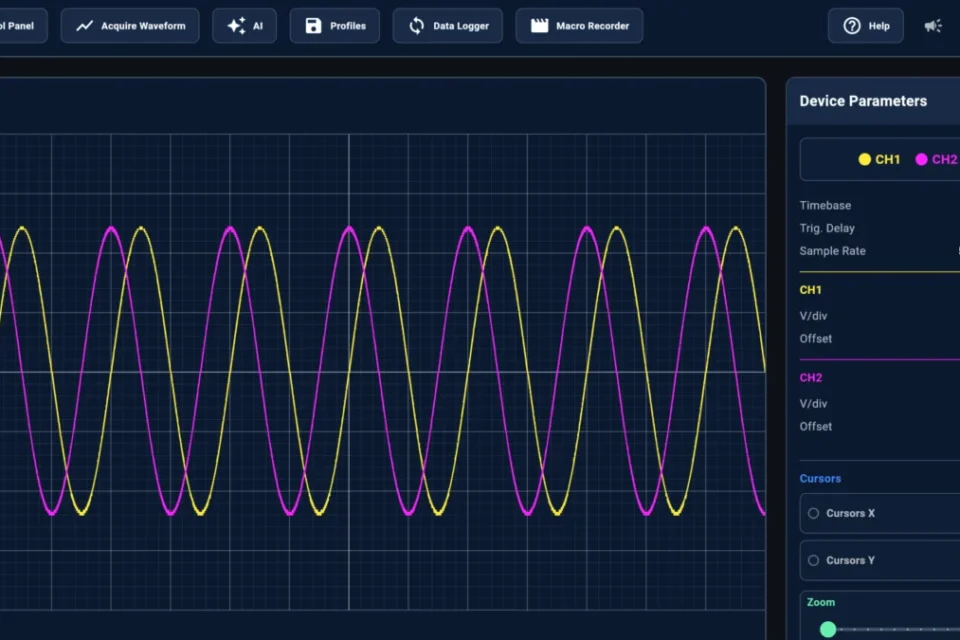
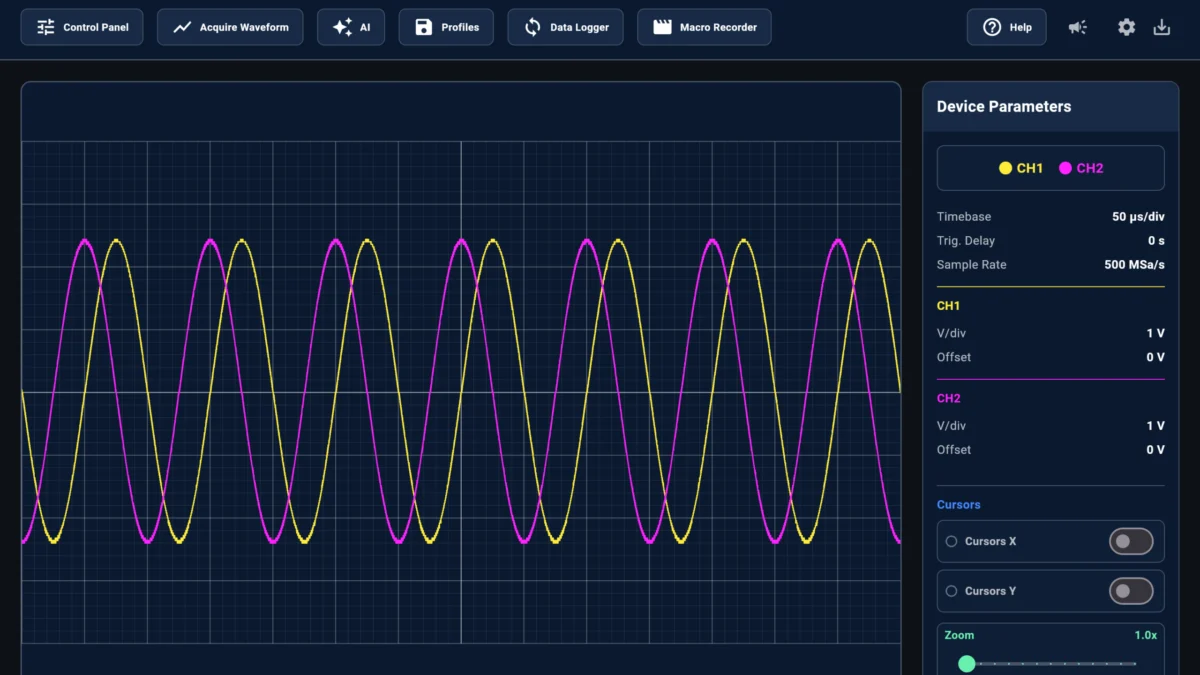
The traditional laboratory environment, long defined by physical interaction with specialized hardware, is undergoing a profound transformation. As technology advances, the demand for sophisticated remote control, automation, and intelligent data analysis for scientific instruments has never been greater. While many modern oscilloscopes offer basic connectivity, their native interfaces often fall short of meeting the complex needs of today’s engineers, researchers, and hobbyists. Stepping into this crucial gap, a pioneering open-source project, SDS-Remote, developed by [Winfried], is poised to redefine how users interact with their Siglent SDS 1000X-E series oscilloscopes, offering an unparalleled web-based interface that vastly expands functionality and streamlines workflows.
Unveiling SDS-Remote: A Paradigm Shift in Instrument Control
At its core, SDS-Remote is more than just a remote control application; it is a comprehensive web interface designed to unlock the full potential of the Siglent SDS 1000X-E series oscilloscopes. Born from a recognition of the limitations inherent in most rudimentary manufacturer-provided interfaces, [Winfried]’s creation elevates the user experience from basic command-line interactions or clunky proprietary software to a feature-rich, intuitive, and highly capable web-based platform. This development is particularly significant for a series of oscilloscopes widely popular among students, educators, and professional engineers for their excellent price-to-performance ratio.
The SDS-Remote leverages both the USB and network interfaces of the Siglent 1000X-E series, though the network interface currently offers the most robust and feature-complete experience, with USB connectivity still under active development. Its suite of features is meticulously crafted to address common pain points and introduce advanced capabilities previously unavailable or cumbersome to implement. From seamless remote operation and advanced waveform capture to integrated data logging, macro automation, and even a forward-thinking mechanism for AI Large Language Model (LLM) integration, SDS-Remote promises to be a game-changer for anyone working with these instruments.
The Evolution of Oscilloscope Interfaces: A Journey Towards Digital Empowerment
To fully appreciate the impact of SDS-Remote, it’s essential to understand the historical trajectory of oscilloscope interfaces and the challenges they present.
From Analog Dials to Digital Screens: Early Developments
For decades, oscilloscopes were purely analog devices, controlled by an array of physical knobs and switches. While offering immediate tactile feedback, this manual approach limited complex measurements and made data capture laborious, often requiring photographic records of the CRT screen. The advent of Digital Storage Oscilloscopes (DSOs) in the late 20th century marked a significant leap, introducing digital sampling, internal memory, and the ability to display and store waveforms electronically. This innovation paved the way for the first rudimentary forms of connectivity.
The Dawn of Remote Control: GPIB and RS-232
Early remote control capabilities typically involved General Purpose Interface Bus (GPIB) or RS-232 serial connections. These interfaces allowed for programmatic control of instruments using text-based commands, often in a proprietary language or a standardized protocol like SCPI (Standard Commands for Programmable Instruments). While revolutionary for automation in industrial settings, these connections were often slow, required specialized hardware, and typically relied on custom-written scripts or command-line tools. The user experience remained far from intuitive, primarily catering to expert programmers.
USB and Ethernet: The Promise and the Pitfalls
With the widespread adoption of personal computers and the internet, USB and Ethernet became the ubiquitous interfaces for modern test equipment. These connections offered higher bandwidth and easier integration with standard computing platforms. However, many manufacturers, while providing these physical interfaces, often bundled them with basic, often clunky, software applications. These applications frequently suffered from poor user interface design, limited data export options, and a general lack of advanced features, leaving users to grapple with manual data transcription or develop their own complex scripting solutions for anything beyond basic control. This "rudimentary" state of affairs is precisely the problem SDS-Remote seeks to solve for the Siglent SDS 1000X-E series, transforming a merely connected device into a truly integrated and intelligent one.
SDS-Remote: Bridging the Gap with Advanced Functionality
SDS-Remote distinguishes itself by offering a suite of features that significantly enhance usability, data handling, and automation. Each capability is designed to address a specific need, moving beyond the simple display of waveforms to comprehensive data management and analysis.
Robust Connectivity: USB (Experimental) and Network (Primary)
SDS-Remote intelligently utilizes the existing hardware interfaces of the Siglent SDS 1000X-E series. While USB connectivity is still experimental, the network interface provides a stable and powerful foundation for remote operations. Network control offers distinct advantages: it allows for greater physical separation between the user and the instrument, facilitates multi-user access (if properly managed), and enables seamless integration into larger network-based test setups or remote laboratory environments. This flexibility is crucial for modern R&D labs, educational institutions, and even hobbyists who prefer to control their equipment from a different room or integrate it into a smart lab system.
Seamless Remote Control and Enhanced User Experience
The primary function of SDS-Remote is to provide a comprehensive remote control experience. Instead of relying on the oscilloscope’s small physical screen and button interface, users can access all controls via a familiar web browser. This graphical user interface (GUI) provides a much clearer overview of settings, simplifies adjustments, and reduces the potential for errors. Imagine setting up complex trigger conditions or adjusting vertical and horizontal scales with the click of a mouse, all while observing the changes in real-time on a larger monitor. This dramatically improves workflow efficiency and reduces eye strain associated with prolonged interaction with the instrument’s built-in display.
Advanced Waveform Capture and Data Analysis
One of the most "super handy" features of SDS-Remote is its ability to capture waveforms and export them directly as CSV (Comma Separated Values) files. This seemingly simple function is incredibly powerful. Native oscilloscope interfaces often provide limited options for data export, frequently requiring proprietary software or complex workarounds to extract raw waveform data. CSV, being a universal and human-readable format, allows for immediate and effortless integration with a wide array of analysis tools, including:
- Spreadsheet Software: Microsoft Excel, Google Sheets, LibreOffice Calc for basic plotting, statistical analysis, and data manipulation.
- Scientific Computing Platforms: MATLAB, GNU Octave, SciPy/NumPy in Python for advanced mathematical operations, signal processing, spectral analysis (FFT), and custom algorithm development.
- Data Visualization Tools: Tableau, Power BI, or even custom scripts for generating publication-quality graphs and reports.
This capability transforms the oscilloscope from a mere display device into a data acquisition system, empowering users to perform in-depth post-processing and derive deeper insights from their measurements.
High-Resolution Screenshots for Documentation and Comparison
The ability to capture screenshots of the oscilloscope’s display directly through the web interface is another invaluable feature. While many scopes offer internal screenshot functions, they often produce low-resolution images or require transferring files via USB sticks, which can be cumbersome. SDS-Remote streamlines this process, providing high-quality digital images of the scope’s current state. This is "much easier to compare waveforms" because:
- Documentation: It facilitates detailed record-keeping for lab reports, research papers, project logs, and troubleshooting guides.
- Collaboration: High-quality screenshots can be easily shared with colleagues or team members, enabling clearer communication and quicker problem-solving.
- Debugging and Iteration: During development or debugging, capturing the waveform at different stages of a circuit modification allows for precise side-by-side comparison, making it effortless to identify the impact of changes. Users can overlay images or quickly toggle between different captures to track subtle variations, a task that is nearly impossible with physical observation alone.
Integrated Data Logging for Long-Term Experiments
For experiments that require monitoring over extended periods, the built-in data logging feature of SDS-Remote is indispensable. Traditional oscilloscopes are not typically designed for continuous, long-term data acquisition, often limited by internal memory or manual intervention. SDS-Remote addresses this by allowing users to set up logging parameters and automatically save results over minutes, hours, or even days. This is critical for:
- Unattended Monitoring: Observing system stability, power consumption, or signal integrity over time without constant supervision.
- Environmental Testing: Capturing data from sensors or devices exposed to varying conditions.
- Trend Analysis: Identifying intermittent faults, long-term drift, or subtle patterns that might otherwise go unnoticed in short observation windows.
- Production Testing: Automating quality control checks for batch manufacturing, logging pass/fail criteria.
This feature significantly expands the utility of the oscilloscope, turning it into a powerful, automated data acquisition and monitoring tool.
Macro Recorder and SCPI Automation: Scripting Without Code
One of the most advanced and productivity-enhancing features is the macro recorder, which brings "basic scripting to the interface without needing to run separate code." The macro recorder allows users to record a sequence of actions performed on the web interface, which are then translated into a series of SCPI (Standard Commands for Programmable Instruments) commands. This recorded macro can then be replayed, saving immense amounts of time for repetitive tasks or complex test sequences.
- What is SCPI? SCPI is an ASCII-based command language used to control programmable test and measurement instruments. It provides a standardized way to communicate with devices, allowing for automated control.
- How it Works: Instead of manually writing SCPI commands, which requires knowledge of the command syntax and instrument specifics, the macro recorder acts as a "learn" function. You perform the desired actions (e.g., setting up trigger, adjusting channels, taking a measurement), and SDS-Remote captures the corresponding SCPI commands.
- Benefits:
- Automation of Complex Tests: Set up intricate test routines for product validation, regression testing, or characterization.
- Reproducibility: Ensure that tests are performed identically every time, crucial for scientific rigor and quality assurance.
- Time-Saving: Eliminate tedious manual setup for recurring measurements.
- Lower Barrier to Automation: Even users without extensive programming experience can create powerful automation scripts. These macros can then be easily integrated into larger automated test frameworks if needed.
AI LLM Integration: The Future of Intuitive Instrument Control
Perhaps the most forward-looking feature is the mechanism to integrate an AI Large Language Model (LLM) to "help translate common language into the correct scope configuration." This represents a significant leap towards truly intuitive instrument control. Imagine being able to type or speak commands like:
- "Set the trigger to rising edge on Channel 1 at 2.5 volts."
- "Measure the peak-to-peak voltage and frequency of the current waveform."
- "Enable bandwidth limit on Channel 2 to 20 MHz."
The AI LLM would interpret these natural language requests and translate them into the precise SCPI commands or GUI actions required to configure the oscilloscope. This feature has the potential to:
- Lower the Learning Curve: New users could quickly become proficient without memorizing complex menus or SCPI commands.
- Speed Up Setup: Rapidly configure the scope for specific measurements.
- Reduce Errors: Minimize configuration mistakes by using clear, unambiguous language.
- Enhance Accessibility: Make advanced instrument features more accessible to a broader audience, including those with limited technical proficiency or certain disabilities.
While still a developing concept, this integration points towards a future where lab equipment understands and responds to human language, making complex scientific tools as easy to use as a smart assistant.
The Open-Source Advantage: Community, Innovation, and Accessibility
SDS-Remote is a testament to the power of the open-source community. By making the project available on GitHub, [Winfried] has not only shared an invaluable tool but also fostered an environment for collaborative development and continuous improvement. The open-source model offers several distinct advantages:
- Community Contribution: Other developers can contribute code, fix bugs, and add new features, accelerating the project’s evolution.
- Transparency and Trust: The code is open for inspection, ensuring no hidden functionalities or security vulnerabilities.
- Accessibility: It makes advanced tools available to everyone, regardless of budget, democratizing access to high-end functionality.
- Customization: Users can modify the code to suit their specific needs, providing unparalleled flexibility.
- Rapid Iteration: Feedback from a diverse user base can lead to quicker improvements and adaptations.
This collaborative spirit is vital in an era where proprietary software often lags behind user expectations and specific niche requirements.
Industry Perspectives and Potential Implications
The emergence of projects like SDS-Remote has significant implications for various stakeholders within the test and measurement industry.
For Users: Empowered and Productive
For individual users, hobbyists, and small businesses, SDS-Remote offers immediate and tangible benefits. It provides professional-grade control and data analysis capabilities without the need for expensive proprietary software licenses or extensive programming knowledge. This translates directly into:
- Increased Productivity: Streamlined workflows and automation save valuable time.
- Enhanced Data Insights: Better tools for data extraction and analysis lead to deeper understanding of phenomena.
- Cost Savings: Maximizing the utility of existing hardware without additional significant investments.
- Future-Proofing: Access to cutting-edge features like AI integration.
For Manufacturers (e.g., Siglent): A Catalyst for Innovation
For oscilloscope manufacturers like Siglent, community-driven projects like SDS-Remote present both opportunities and challenges.
-
Opportunities:
- Increased Perceived Value: SDS-Remote enhances the appeal and functionality of Siglent’s SDS 1000X-E series, potentially boosting sales.
- Community Engagement: It fosters a vibrant user community around their products, generating positive brand sentiment.
- Free R&D Insights: The project serves as a living laboratory for user needs and desired features, providing invaluable feedback for future product development. Siglent could learn from the features users are most enthusiastic about.
- Partnership Potential: Manufacturers could potentially embrace and officially support such community efforts, or even integrate the best features into their official software.
-
Challenges:
- Highlighting Gaps: SDS-Remote implicitly highlights areas where manufacturer-provided software falls short.
- Competitive Pressure: It might pressure manufacturers to invest more heavily in their own software development to keep pace with community innovations.
Ultimately, such projects can act as a powerful catalyst for innovation, pushing the entire industry towards more user-centric and feature-rich software solutions.
For the Broader Market and Educational Sector
The existence of robust, open-source interfaces like SDS-Remote can inspire similar developments for other instruments and brands, leading to a broader improvement in the accessibility and functionality of lab equipment across the board. In the educational sector, such tools are invaluable. They allow students to:
- Learn Modern Instrument Control: Gain hands-on experience with advanced remote operation and automation.
- Focus on Concepts, Not Setup: Spend less time struggling with clunky interfaces and more time understanding the underlying electrical engineering principles.
- Engage with Data Science: Practice data acquisition, analysis, and visualization using real-world instrument data.
The Future of Lab Instrumentation: A Glimpse
SDS-Remote offers a compelling glimpse into the future of laboratory instrumentation, characterized by:
- Software-Defined Instrumentation: The increasing reliance on software to define and extend the capabilities of hardware.
- Pervasive Automation: Routine and complex tasks being handled by automated scripts and macros, freeing up human ingenuity for higher-level problem-solving.
- Intelligent Integration: The seamless integration of instruments with powerful computing resources, data analytics platforms, and artificial intelligence.
- Remote and Collaborative Labs: The ability to conduct experiments and analyze data from anywhere, fostering global collaboration and remote learning.
- User-Driven Innovation: The growing influence of user communities and open-source projects in shaping the direction of technological development.
Conclusion
[Winfried]’s SDS-Remote is a remarkable achievement, transforming the Siglent SDS 1000X-E series oscilloscope into a far more powerful and versatile instrument. By addressing the common shortcomings of rudimentary interfaces and introducing a wealth of advanced features – from comprehensive data capture and logging to macro automation and the promise of AI integration – it sets a new standard for user interaction with lab equipment. This open-source initiative not only benefits current Siglent users but also serves as an inspiring example of how individual innovation, empowered by community collaboration, can significantly impact the landscape of scientific and engineering tools.
For those already utilizing or considering a Siglent SDS 1000X-E series oscilloscope, SDS-Remote represents a welcome and impactful upgrade. We encourage everyone interested to head over to [Winfried]’s GitHub page (https://github.com/klumw/sdsremote) and explore this innovative project for themselves. Furthermore, this endeavor should inspire a broader conversation: What other improved user interfaces have you developed or encountered for your equipment? Share your experiences, for the collective pursuit of better tools is what drives progress in science and technology. SDS-Remote is not just a tool; it’s a vision for the future of instrumentation, where capability meets unparalleled user experience.
